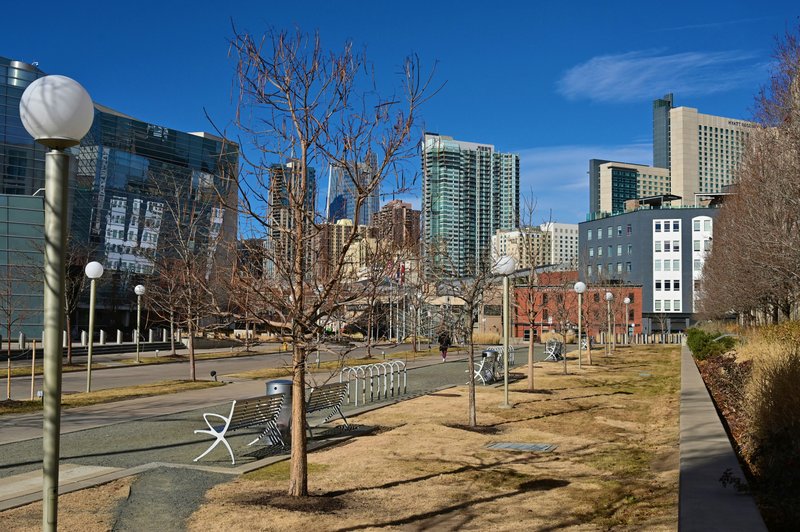
Rising from downtown Denver in a spire-topped tower, this 239-room property commands sweeping views of the Rockies through floor-to-ceiling windows. Over 1,000 commissioned works—bronze sculptures, oil abstractions, contemporary metalwork—line the corridors and suites. The third-floor rooftop pool serves local microbrews year-round, while families find thoughtful touches: children's bathrobes, dedicated menus, and complimentary cribs and strollers.
Explore Denver
Where to Stay
Denver's Beaux-Arts Union Station houses this 112-room boutique hotel in former railroad executive offices ringing a soaring 65-foot central hall. Room styles shift from Victorian elegance to Art Deco flourishes to post-industrial loft aesthetics, each uniquely configured. The lobby doubles as a working train station waiting room, surrounded by restaurants and bars, while LoDo's galleries and bookshops sit steps away. Dogs under 60 pounds welcome.
AvroKO's mid-century modernist interiors weave Colorado's landscapes into 63 intimate rooms at this Cherry Creek North members' club, which draws Denver's creative set rather than the usual private-club crowd. Greek and Mediterranean flavors dominate at Kinis and Cretans—a deliberate break from regional ranch cuisine—while the rooftop pool and Moroccan-accented Chez Rock with its live DJs deliver nocturnal energy. Pet-friendly, with sauna.
An hour north of Denver, this 1923 landmark anchors Old Town Fort Collins with 54 stylishly updated rooms at the foot of the Rockies. The underground Ace Gillett's Lounge channels speakeasy glamour, while the street-level Ace Café and sunny Mugs Coffee Lounge serve as neighborhood gathering spots. A compact spa and pet-friendly policies suit active travelers seeking mountain-town character with boutique polish.
Record players spin in every room at this 164-key boutique property in Fort Collins' Old Town, where guests can borrow guitars from a curated lending library. The musical theme extends to Magic Rat, an intimate live venue downstairs, while an indoor rooftop lounge and American brasserie round out the dining options. Contemporary interiors draw on the district's Victorian heritage, appealing to travelers seeking creative energy over conventional luxury.
Colorado's native aspen trees inform every angle of this striking eco-hotel's façade, while inside, natural and recycled materials create spaces where urban architecture and wilderness sensibility coexist. Local artists' work lines the corridors, birdsong drifts through elevators, and a rooftop terrace bar surveys the city skyline. The 265 rooms welcome pets, and garden spaces reinforce the property's commitment to bringing nature into downtown Denver.
Restrained opulence defines this downtown Denver address, where fastidious attention to detail extends from impeccably appointed rooms to Elway's, the in-house modern steakhouse owned by NFL legend John Elway. Families find particular welcome here: children check in at their own miniature desk, receive colouring books and teddy bears, and can request in-room tepees for play. Interconnecting rooms accommodate larger groups with ease.
Victorian aesthetics meet contemporary design in this intimate 16-room address in Denver's Highlands district, where art galleries and breweries line the surrounding streets. Rooms come equipped with Le Labo products, rain showers, and Marshall speakers, while flexible configurations—including bunk rooms for up to eight—suit groups and families. Downstairs, Wildflower delivers refined Italian cooking to guests and locals alike.
Textile references shape The Jacquard’s Cherry Creek identity, from a multi-story lobby with floating staircase and neon chandelier to glass-walled rooms and carpeting keyed to the district’s design heritage. Narrative covers New American dining; Kisbee on the Roof is the draw with cocktails and a 180-degree mountain sweep between Longs Peak and Pikes Peak. Peloton-equipped suites, outdoor pool, Jacuzzi, and pet-friendly policies suit style-led city stays.
At 16th and Market, Thompson Denver places 216 rooms near Union Station, Coors Field and a dense grid of retail and dining. Its retro-leaning modern style gives the luxury boutique format a polished urban edge, suited to travelers who want downtown access with design character. Chez Maggy brings French-accented cooking from chef Ludo Lefebvre, while Reynard Social frames Denver, the skyline and distant Rockies from the bar.
Where to Eat
Chef Taylor Stark earns two Michelin stars and a Green Star at this intimate Denver address, where a multicourse tasting menu draws from global pantries while staying rooted in Colorado terroir. Berkshire pork dumplings arrive in turmeric-dill broth recalling Chiang Mai; bison loin meets dried shrimp caramel and grilled apricot. The beverage program—inventive cocktails alongside shrewd wine selections—matches the kitchen's ambition.
Chef Duncan Holmes earned a Michelin star for his vegetable-forward tasting menus at this intimate RiNo counter, where eighteen diners watch a focused brigade execute dishes like Calrose rice porridge with black truffle and hedgehog mushroom. The omnivore path might bring seared quail with date purée and foie gras-enriched jus, while desserts—chocolate with cocoa nib tuile, pomegranate jam, nutmeg-salsify ice cream—deliver a memorable finale.
Chef Byron Gomez orchestrates a tasting menu where hearth cooking meets Japanese and Nordic sensibilities, each course bearing the signature char of open flames. A dedicated fermentation program transforms local grains and seasonal produce into complex accompaniments—witness the kombu-cured diver scallop paired with fermented crabapple and chamomile. The restaurant holds a Michelin star and Green Star, with notably inventive non-alcoholic pairings.
For over four decades, Chef Toshi Kizaki has shaped Denver's sushi landscape, and his intimate omakase counter represents the culmination of that expertise. Now in his seventies, he still crafts each piece of nigiri himself, applying traditional edomae techniques alongside inventive touches. The procession moves from delicate black-and-white sesame tofu through pristine seafood—buttery seared black-throat sea perch, vinegar-brightened gizzard shad—each course reflecting meticulous sourcing and seasoned precision.
Chef Justin Fulton's Michelin-starred tasting counter seats just eight guests around an open kitchen, where a multicourse menu draws on Colorado's seasons while threading Japanese technique through global influences. Parisian gnocchi arrives swathed in mascarpone and caviar; dry-aged duck meets cherries and truffle jus. Individual loaves of olive oil brioche, baked fresh for each diner, underscore the personal scale and genuine warmth that define the experience.
At Mezcaleria Alma, Chef Johnny Curiel channels the energy of Mexico City cooking into a small, stylish Denver room with a mezcal-bar pulse. The one Michelin star reads in details: kanpachi ceviche with dill and roasted garlic, uni-and-Hokkaido-scallop aguachile with mandarin and crisp ginger, and slow-cooked duck on blue corn tlacoyo, best paired with agave-led cocktails.
At Alma Fonda Fina, one Michelin star frames a Denver Mexican address around Johnny Curiel’s Guadalajara roots and polished technique. The cooking is vivid rather than showy: crisp pork belly carnitas tucked into a sourdough flour tortilla, agave-roasted sweet potato with salsa matcha and whipped requesón, and Maine diver scallop crudo sharpened with tomatillo-apple aguachile. It suits a focused, flavor-led dinner.
Partner/Chef Max MacKissock helms this retro-inflected steakhouse where kitschy artwork lines the walls and picture windows flood the corner dining room with light. The signature Denver steak—anterior chuck sourced from Blackhawk Farms, Kentucky—arrives with impeccable technique, while starters like the wedge salad trade tradition for innovation with guanciale and tomato confit. Banana crème brûlée with spiced cherry preserves closes the meal memorably.
Chef Johnny Curiel channels his Jalisco Highlands heritage into a moody, statement-lit dining room where regional Mexican cooking takes bold, personal form. The menu arcs from bright aguachile and kanpachi tostada crowned with Santa Barbara uni through to a showstopping braised Colorado lamb shank, served bone-in for building your own tacos. Soulful, shareable, and rooted in place.
A cornerstone of Denver's fine dining scene, Barolo Grill channels Northern Italian tradition through handmade tortellini with roasted squash and taleggio, and a signature braised duck paired with kalamata olives. The wine program—anchored by an almost scriptural collection of Barolo—benefits from staff who deepen their expertise through annual European pilgrimages, delivering guidance as refined as the cuisine itself.
What to Do
Spread across 6,000 square feet of marble and natural stone, this Denver sanctuary channels Colorado's mountain spirit through warming earth tones and abundant natural light. The signature Four Hands Massage employs two therapists moving in synchronized rhythm, while couples retreat to private suites for side-by-side treatments. Local flair appears in the playful Hops N' Honey Pedicure, complete with caramel foot mask.
Frequently Asked Questions
Which Denver neighborhoods offer the best hotel locations?
+
LoDo (Lower Downtown) places guests within walking distance of Union Station, Larimer Square's restaurants, and Coors Field. Cherry Creek suits those seeking quieter streets with upscale shopping and established dining. RiNo appeals to visitors drawn to galleries, craft breweries, and the city's street art scene, though accommodation options there remain limited compared to the downtown core.
What makes Denver's dining scene distinctive?
+
The city has developed a serious farm-to-table culture drawing on Colorado's ranching heritage and growing produce regions. Expect excellent beef and lamb preparations, creative uses of regional game, and a brewing culture that extends into gastropub territory. Larimer Square and the Platte Street corridor concentrate many of the city's destination restaurants, while Federal Boulevard offers authentic Vietnamese and Latin American cooking.
How does Denver's altitude affect visitors?
+
At one mile above sea level, newcomers often notice increased sun intensity, drier air, and quicker fatigue during the first day or two. Hotels typically stock additional water and humidifiers. The practical advice: hydrate consistently, moderate alcohol intake initially, and allow a day before any strenuous mountain excursions. Most visitors acclimate within 24 to 48 hours.
Nearby Destinations
Explore USADenver spreads across the high plains where the Great Plains meet the Rocky Mountain foothills, a geography that shapes everything from architecture to atmosphere. The LoDo district preserves Victorian-era warehouses now converted to boutique properties, while the RiNo Art District pulses with converted industrial spaces and rooftop bars overlooking street murals. Cherry Creek offers a different register entirely — tree-lined streets with established dining rooms and specialty retailers.
The city's elevation at 5,280 feet creates particular conditions: dry air, intense sunshine, and views of snow-capped peaks from upper-floor rooms across the downtown core. Neighborhoods like Capitol Hill and the Golden Triangle maintain their own distinct characters, mixing early 20th-century brownstones with contemporary gallery spaces. Whether arriving via Union Station's restored Beaux-Arts hall or settling into properties along the 16th Street pedestrian corridor, visitors encounter a Western city that has developed its own sophisticated identity far from coastal assumptions.