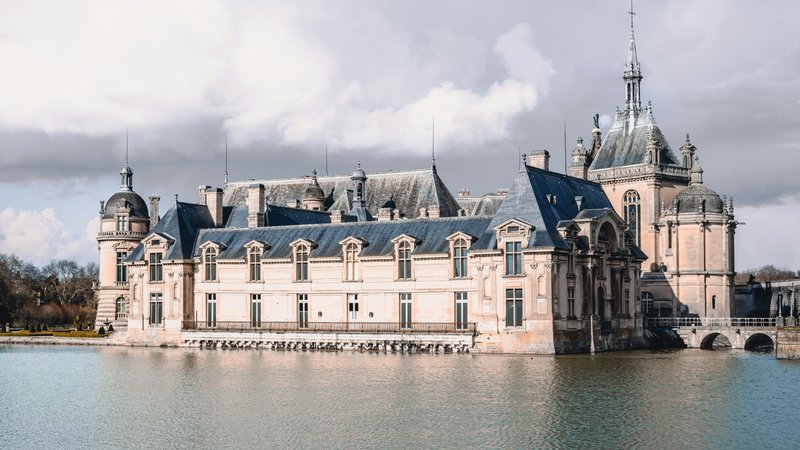
An hour inland from Le Touquet, this restored château commands gardens where herbs grow for chef Christophe Dufossé's two-Michelin-starred kitchen. The 28 rooms balance period architecture with contemporary elegance, while a Sothys spa with sauna and steam rooms offers recovery after exploring the grounds. A swimming pool and fitness facilities complete an estate suited to gastronomes seeking countryside refinement near the Belgian border.
Explore Lille
Where to Stay
Louis XV commissioned this palatial hospital in 1751, and its conversion into a spa resort has preserved the original blue stone vaults and seven-meter ceilings that define its grandeur. Suites overlook the formal Cour d'Honneur, while the spa occupies the historic cellars, its indoor pool carved into foundations centuries old. Pet-friendly and minutes from regional golf courses, Royal Hainaut serves as a refined base for exploring northern France.
The Countess d'Hespel's 1736 townhouse, now Lille's first five-star boutique hotel, preserves period ceilings and parquet beneath contemporary art installations. Nineteen rooms include La Suite Clarance with private staircase; Le Pavillon wing adds six urban-styled chambers. Chef Gaëtan Citerne's Michelin-starred restaurant sources from the three-hundred-square-meter garden—aromatic herbs, seasonal vegetables, honey from on-site hives—serving inventive seafood-focused French cuisine in wood-paneled dining rooms, an intimate library, or the garden terrace.
Architect Jean-Paul Viguier's dramatic triangular glass tower rises above Lille's business district like an ocean liner berthed on the skyline, anchored by a two-story casino with live entertainment and gaming. The fourth-floor spa delivers Cinq Mondes kobido facials and signature Diane Barrière detox treatments, while Les Hauts de Lille serves contemporary French cuisine in seven-course seasonal menus. Soundproofed rooms behind floor-to-ceiling windows frame the city's bell towers or neighboring Parc des Dondaines, a Riviera-meets-Eurostar counterpoint to Flemish tradition.
A 15th-century Flemish hospice reimagined as Lille's first five-star address, preserving its stained-glass facade, intact chapel and original halls alongside Philippe Starck furniture and contemporary art. Louis XV oak paneling meets transparent Lucite in 72 rooms overlooking courtyard gardens. Two restaurants—gastronomic and Northern French brasserie L'Estaminet Flamand—anchor the offering, while the glass-roofed courtyard shifts from daytime café to evening piano bar. Spa, hammam and indoor pool complete the monastic-meets-modern experience.
Where to Eat
A graceful château outside Lille houses Chef Christophe Dufossé's two-Michelin-starred kitchen, where organic Northern French produce takes center stage. His modern approach—self-sufficient, vegetable-forward, resolutely sustainable—yields dishes like monkfish gratin with sabayon and a trio of shellfish. The contemporary glass conservatory frames each course, culminating in a dessert trolley of almost theatrical abundance.
Beneath the vast glass roof of a converted printing works, chef Diego Delbecq and pastry chef Camille Pailleau craft two-Michelin-starred cuisine with a distinctive emphasis on tangy, bitter, and acidulated notes. Their plates celebrate vegetables, iodine-rich ingredients, and aromatic broths, balanced with subtle nods to northern French traditions. Evening guests begin on the mezzanine with hors-d'oeuvres; the weekday lunch menu offers an accessible entry point.
Inside a reimagined early-twentieth-century textile factory near Lille, chef Félix Robert and his Thai-born wife Nidta craft one-starred cuisine that bridges French precision with Asian soul—tempura, bao, Thai curry appearing across tasting menus presented as hand-illustrated haikus. The audacious 'merveilleux marin' pairs chocolate with oyster and seaweed foam; a refined sweetbread 'laab' pays homage to Nidta's heritage. Cerebral, poetic, unmistakably personal.
Guillaume Barengo's Michelin-starred kitchen occupies the first floor of a striking contemporary building in Vieux Lille, where a single seasonal menu showcases virtuoso technique through dishes like red mullet with Jerusalem artichoke-pear millefeuille and rare venison paired with lardo di Colonnata, butternut squash, and peppery sauce. The open kitchen reveals precise craftsmanship across three- to seven-course formats, while La Griotte brasserie operates below for more casual dining.
Chef Alexandre Miquel holds a Michelin star at this elegant address within an 18th-century mansion, where period wood panelling and a former library salon frame creative seasonal menus. His delicate seafood-forward cooking draws on organic herbs and vegetables from the enclosed garden courtyard. The Menu l'horloge—entrée, plat, canapés and amuse-bouche for €49—suits time-pressed lunches, while longer evenings unfold on the peaceful summer terrace.
Valentina Giacobbe and Julien Ingaud-Jaubert—alumni of Pierre Gagnaire and other haute kitchens—have built a Michelin-starred haven for vegetable-forward gastronomy near the Grand'Place. Giacobbe's Italian-Asian heritage inflects seasonal plates that balance delicacy with bold accents, while a fully vegetarian menu proves her technique extends beyond token concessions. The red-brick interior nods to Lille's industrial past; the cooking looks firmly ahead.
Chef Gérald Guille draws on his Étaples coastal heritage to craft modern, uninhibited gastronomy that earned Pureté its Michelin star. His seasonal tasting menus—scallops with mimolette and limequat, trout with beetroot and blood orange—balance invention with classical technique. The long, open-kitchen dining room pairs raw concrete, leather, and wood to create a focused backdrop, letting the chef's personality-driven plates command full attention.
Chef Florent Ladeyn's rustic dining room overlooks the rolling Monts de Flandre, where charcoal cooking unfolds as theatre before guests. His single carte-blanche menu—required for the whole table—channels deep Flemish tradition through an ecological lens, earning both a Michelin star and Green Star. The legendary Maroilles cheese fries alone justify the drive from Lille into this pastoral corner of French Flanders.
A beautiful 18th-century Flemish house shelters just twenty seats and one Michelin star in the hilltop village of Cassel. Chef Eugène Hobraiche builds his contemporary menu around fish hauled fresh from Dunkirk and vegetables pulled from local soil—salmon confit perfumed with Sichuan pepper, pollack brightened by mustard and rainbow carrot gnocchi. Intimate, precise, and deeply rooted in its terroir.
Beneath the glass-roofed dining rooms of Château de Beaulieu, Chef Christophe Dufossé orchestrates a contemporary brasserie celebrating Pas-de-Calais terroir. North Sea fish—Côte d'Opale mackerel, Étaples bass, Boulogne scallops—arrive with the robust character imparted by strong coastal currents. Summer brings barbecue on the expansive terrace; winter pivots to slow-cooked comfort. Classic architecture frames contemporary art throughout.
What to Do
Within the grounds of Château de Beaulieu, a wooden pavilion overlooks the moat, housing a 500-square-meter wellness sanctuary where serious swimmers can stretch out in a 20-meter heated lap pool. Sauna and hammam sessions precede Sothys treatments, while couples opt for side-by-side massages in tranquil treatment rooms. Weekend packages pair spa access with the château's two-Michelin-star dining—an ideal escape from Lille, just an hour away.
Frequently Asked Questions
What neighborhoods should I explore in Lille?
+
The Vieux-Lille district offers the densest concentration of architectural interest and dining options, with cobblestone streets threading between 17th-century Flemish houses. Wazemmes, southwest of the centre, hosts a sprawling Sunday market and a more multicultural atmosphere. The recently redeveloped Saint-Sauveur quarter, in a former rail freight depot, draws a younger crowd with its exhibition spaces and contemporary restaurants.
When is the best time to visit Lille?
+
September through November brings mild weather and the famous Braderie de Lille, Europe's largest flea market, held the first weekend of September. Spring offers pleasant temperatures for walking the old town, while winter transforms the Grand Place into a Christmas market. Summer sees many locals depart, leaving the city quieter but the restaurant terraces at their liveliest.
What local dishes should I try in Lille?
+
Carbonnade flamande, a beer-braised beef stew, appears on most estaminet menus and represents the city's Flemish culinary identity. Welsh, a rarebit-style dish of cheddar melted over ham and toast, arrived via British textile workers in the 19th century and remains a local staple. Potjevleesch — a terrine of four meats in aspic, served cold with frites — rewards those curious about traditional Flemish charcuterie.
Nearby Destinations
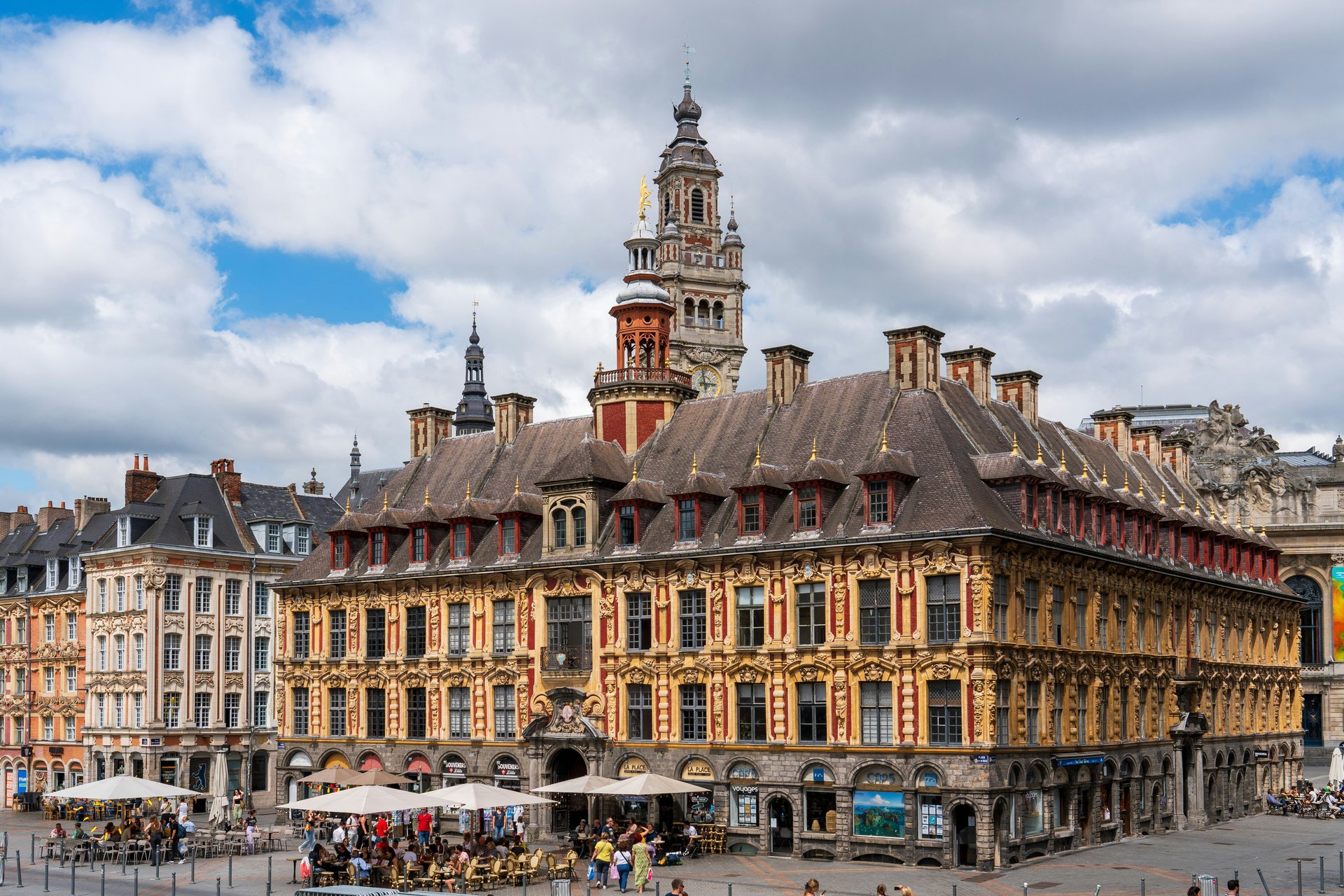
Explore FranceLille's Flemish heritage announces itself immediately in the ornate gables of the Vieille Bourse and the red-brick townhouses lining the Grand Place. The old town, compact and walkable, rewards slow exploration — duck into courtyards off Rue de la Monnaie, browse the antique dealers around Rue Basse, or watch the morning market unfold at Wazemmes, where North African spices sit alongside local maroilles cheese. The best historic hotels occupy converted textile mansions, their interiors a satisfying tension between period details and contemporary comfort.
The dining scene here reflects both Flemish roots and French technique. Estaminets serve carbonnade flamande and potjevleesch in wood-paneled rooms unchanged for decades, while a younger generation of chefs has brought inventive cooking to converted warehouses near Saint-Sauveur. Explore the best restaurants to navigate this range. The café culture tilts Belgian — expect strong beer, generous portions, and conversations that stretch past midnight. For warmer months, the best outdoor restaurants claim terraces along the squares where locals gather through the long northern evenings.