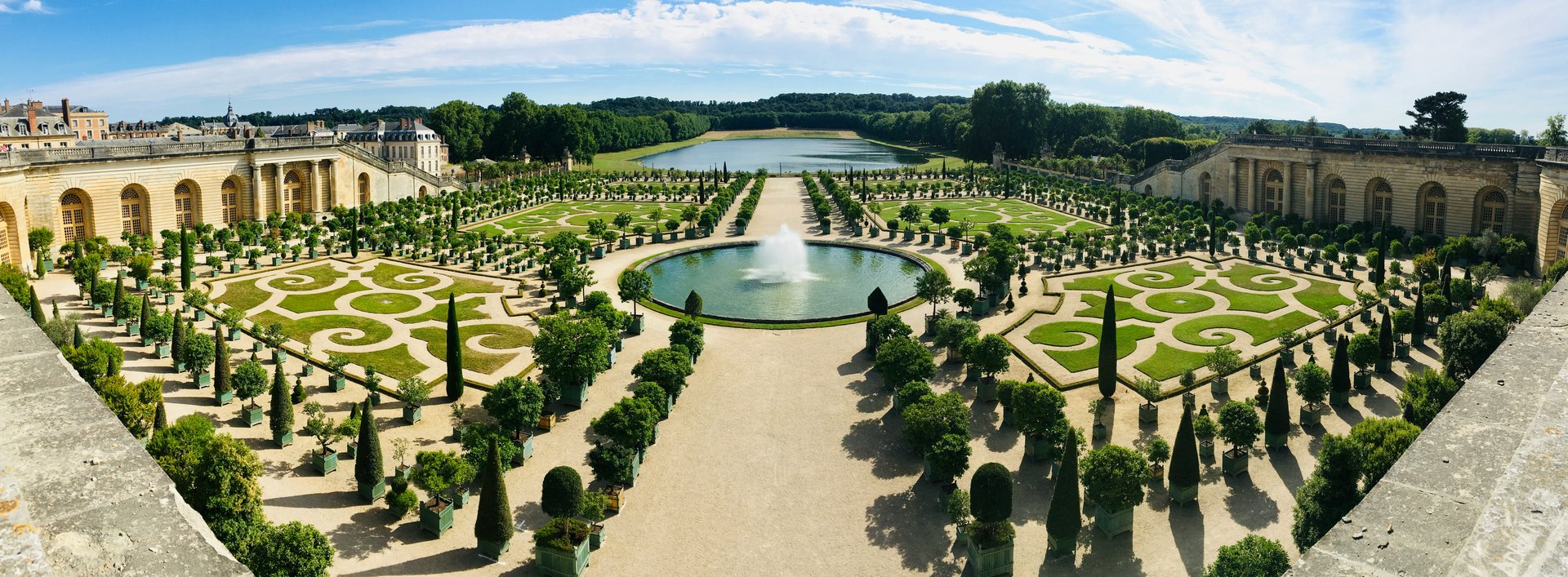
A 17th-century building within the Palace of Versailles grounds, Le Grand Contrôle grants private tours of the château and Hall of Mirrors outside public hours. Alain Ducasse's One MICHELIN Star restaurant recreates Sun King banquets, while 13 gilded rooms overlook the Orangerie gardens. The Valmont spa offers hand-painted frescoes, a 15-meter pool, and Marie-Antoinette experiences including period costume dress-up and themed tea service in her former cabinet.
Explore Versailles
Where to Stay
The historic salon where the Treaty of Versailles was drafted still anchors this landmark hotel, set within three hectares opening directly onto Louis XIV's royal domain through the Queen's Gate. Fiona Thompson's soft-toned interiors balance Gordon Ramsay au Trianon's Michelin-starred dining with the sprawling 2,800-square-meter Spa Guerlain—Île-de-France's largest wellness sanctuary. Family suites, a Grecian pool, and Louis Benech's landscaped gardens broaden the appeal beyond heritage-minded couples.
Across the street from the Château de Versailles, Les Lumières occupies two restored historic pavilions where each of 31 rooms honors an Enlightenment figure—Voltaire, Descartes—with keys presented in storytelling books. The basement spa features Le Domaine cosmetics from Brad Pitt's Miraval estate, while Café Pierre Hermé commands Place d'Armes views beneath six-meter ceilings. Chef Erwan Le Thomas helms La Table des Lumières, emphasizing vegetables and local sourcing, alongside Bar des Philosophes' curated sparkling wines.
A ten-minute stroll from the palace gates, this 19th-century property channels royal grandeur through emerald-and-gold interiors, parquet floors, and trompe l'oeil ceilings. The lobby bar glows beneath an arched glass atrium fitted with a striking modernist chandelier, while Alcôve delivers contemporary French cooking in vibrant surroundings. Turkish bath, steam rooms, and sauna complete the offering for travelers seeking refined comfort near Versailles.
Where to Eat
Gordon Ramsay's Versailles outpost has found its stride under Italian head chef Gabriele Ravasio, earning a Michelin star and serious consideration for a second. The signature Breton lobster with century-old balsamic sets the tone, while pastry chef Eddy Benghanem closes meals with desserts rivaling Paris's elite. Bay windows frame the palace grounds from a luminous baroque dining room—the finest table in town.
Chef Jean-Baptiste Lavergne-Morazzani has held a Michelin star since 2016 at this refined address in the Cour des Senteurs, a few steps from the palace. The regularly updated menu draws on organic produce from the family's own vegetable garden and sustainable sources, with signature dishes like marinated langoustine on warm rice with vinegar and agastache, finished with langoustine emulsion. The extensive wine list complements the modern, seasonal cooking.
Xavier Pincemin, the 2016 Top Chef victor, has returned to his native Versailles to craft modern dishes rooted in local terroir. His evening tasting menus spotlight John Dory bathed in shellfish broth and scented with anise hyssop, and loin of veal layered with baby artichoke, pastrami and a concentrated veal gravy. Each plate honours traditional technique while pushing flavor into unexpected registers, earning a Michelin plate and a devoted international following.
Behind the charming façade of a historic Marly inn, a Franco-Japanese couple orchestrates a one-starred table of surgical precision. The kitchen's defining creation—gỏi cuốn of blue lobster paired with foie gras terrine, spring vegetables, and Aquitaine caviar—captures the cross-cultural refinement at play. Modern technique meets meticulous sourcing in a setting that rewards the gastronomy-focused traveler venturing beyond Versailles proper.
Chef Erwan Le Thomas champions vegetables at this fine dining address inside a 17th-century pavilion facing the Palace of Versailles. Seasonal ingredients—think onion, Comté and vin jaune tart—take centre stage in generous modern French cooking, while meat and fish remain optional accompaniments. The intimate dining room, dressed in plush carpet and porcelain, attracts vegetarians and omnivores alike for elegant, produce-driven cuisine rooted in regional tradition.
A nineteenth-century farmhouse just outside Versailles, La Ferme de Voisins welcomes diners through a flower-filled courtyard that doubles as a summer terrace. The focused menu balances house classics—most notably an irreplaceable preparation of calf's head—with inventive seasonal plates. Meals conclude with the signature rum and orange punch baba, a fitting finale to an unhurried countryside lunch.
Virginia creeper cloaks the thatched roof of this century-old country inn near Versailles, where three generations of the same family have tended the stoves since 1926. The kitchen honors French tradition with market-driven dishes and premium ingredients, the lobster stew a seasonal signature worth planning around. Lunch unfolds beneath ancient plane trees on a shaded terrace—the quintessential auberge experience.
A flower-filled courtyard terrace sets the scene at this Chevreuse address, where chef Laurent Gasnier draws on formative years at Le Bristol, George V, and alongside the Troisgros family. His cooking favors impeccably sourced, mature produce—vegetables and fish treated with precision. Expect dishes like courgette ball with organic Brousse and basil pistou, or sea bass lifted by coconut and young broad beans.
Facing the Abreuvoir's famous sculpted horses, this triple-concept address houses a delicatessen, wine shop, and luminous conservatory restaurant with herringbone parquet floors. The kitchen delivers polished creative plates—organic œuf parfait paired with Le Puy lentils and smoked herring, or turbot confit scented with Mat-Khen pepper and braised fennel. A short detour from Versailles rewarded by a stroll through the adjacent park.
Overlooking Clairefontaine pond from its privileged position between the Chevreuse Valley and Rambouillet forest, this Michelin-recognized table delivers refined comfort cooking with seasonal intelligence. Truffles appear generously throughout the menu, while autumn and winter bring carefully sourced game to the fore. The panoramic water views and wooded surroundings make it a compelling countryside detour from nearby Versailles.
What to Do
Marble water walls set the tone at this intimate spa within a 17th-century pavilion facing the Palace of Versailles. State-of-the-art massage tables anchor each treatment cabin, while hammam and sauna facilities extend the wellness circuit. The herbal tea room offers a quiet transition back to reality after treatments, completing a sensory experience rooted in both historic architecture and contemporary technique.
Frequently Asked Questions
Is Versailles worth an overnight stay rather than a day trip from Paris?
+
Staying overnight allows access to the palace gardens during the quieter morning hours before Paris crowds arrive, plus evening dining in the Saint-Louis quarter when the town returns to its residential rhythm. The twenty-minute RER journey means easy access to Paris while avoiding the rush to catch last trains.
Which Versailles neighbourhoods are best for dining and accommodation?
+
The Quartier Saint-Louis offers the highest concentration of restaurants and boutique hotels within 18th-century townhouses. The area around the Marché Notre-Dame provides market proximity and café terraces, while addresses near the château's Place d'Armes suit those prioritising palace access over local atmosphere.
When do the Grandes Eaux fountain shows run at Versailles?
+
The musical fountain displays operate weekends from late March through October, with additional Tuesday shows during peak summer months. Evening performances with fireworks occur on selected Saturday nights in summer. Gardens remain free to enter on days without fountain programming.
Nearby Destinations
Explore FranceBeyond the gilded gates and mirrored halls of the château, Versailles maintains a quieter identity as a residential town where Parisians escape for weekend lunches and unhurried afternoons. The Quartier Saint-Louis, with its grid of 18th-century streets laid out for court artisans, hosts antique dealers and neighbourhood bistros in buildings that predate the Revolution. The covered Marché Notre-Dame, operational since Louis XIV's reign, remains the social anchor where locals queue for aged Comté and seasonal produce from Île-de-France farms.
The dining scene splits between historic restaurants in former royal dependencies and a newer wave of stylish restaurants along the Rue de Satory and near the Potager du Roi. Chef-driven tables have multiplied in recent years, drawing the same Paris crowd that once dismissed Versailles as a day-trip destination. Hotels range from converted townhouses with parquet floors and courtyard gardens to contemporary addresses near the Rive Droite station, most within walking distance of both the palace grounds and the town's quieter residential squares.