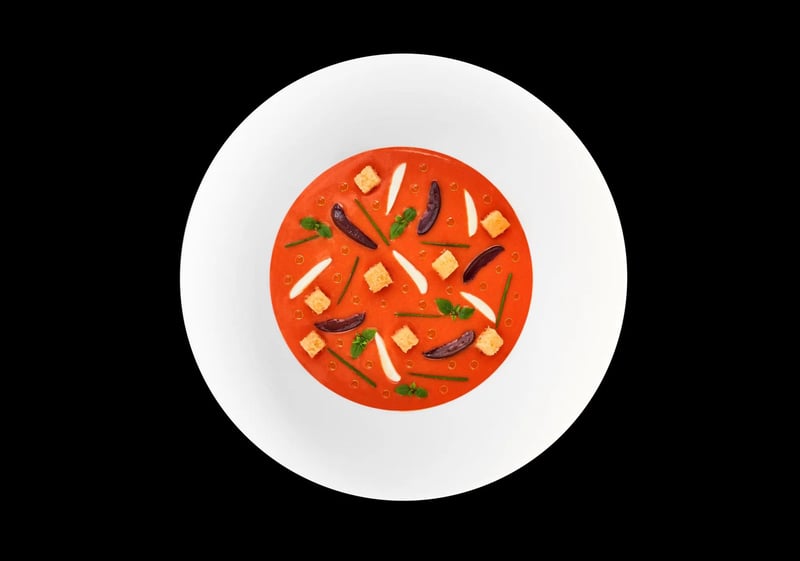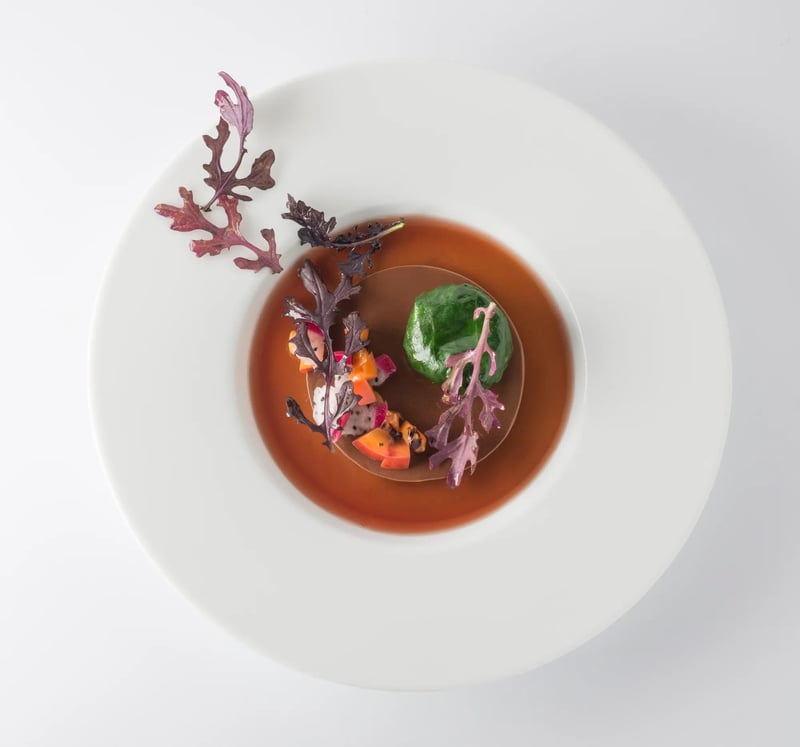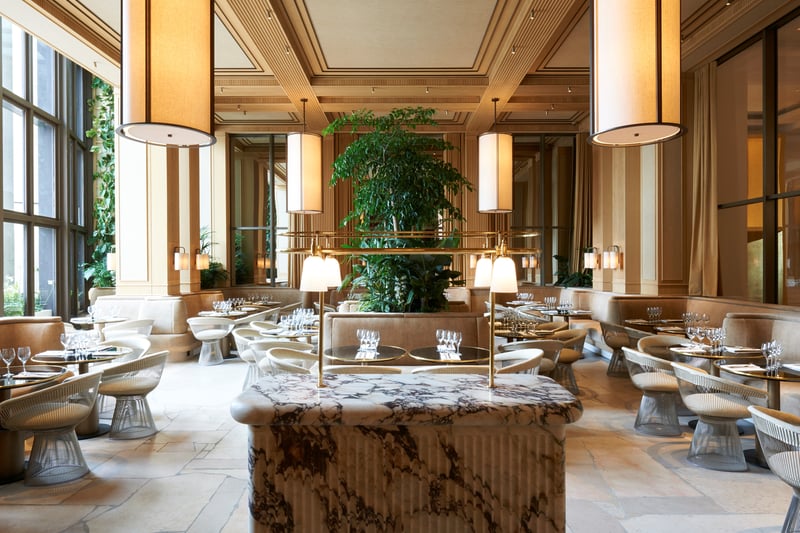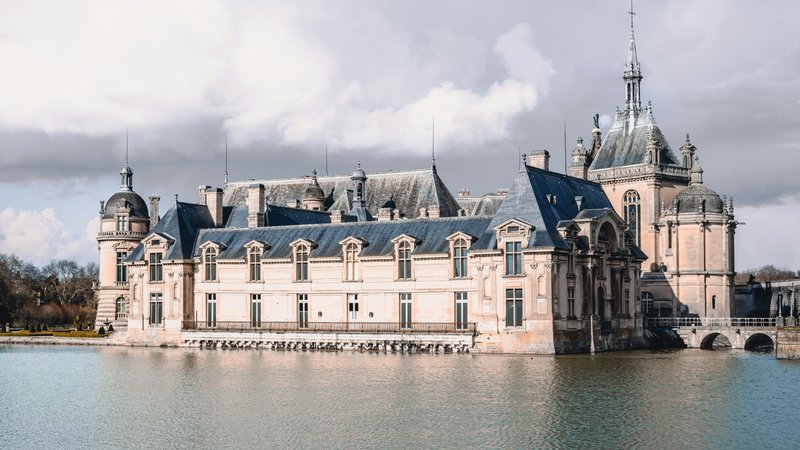
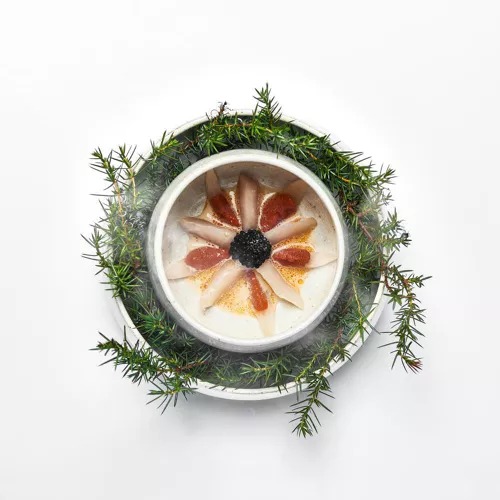
Grégory Garimbay's vegetable-mineral-seafood cuisine earns both a Michelin star and Green Star at this 1892 château-turned-restaurant, drawing over 250 varieties from the Clos de Nonville estate's dedicated market gardens. His signature langoustine arrives twice—once in hot consommé, once raw in herbal oil pressed from the claws—while Coline Doussin's pine needle and Madagascar chocolate dessert closes the six-course progression. Laura Gonzalez's 2021 renovation transformed the winter garden dining room, serving thirty covers dinner-only.
Explore Paris 1 Michelin Star Restaurant
Named for Anne of Austria, this one-Michelin-starred table occupies the historic Pavillon de la Reine on Place des Vosges. Chef Mathieu Pacaud's kitchen delivers classic French cuisine with precision—scallops dressed in hazelnut oil and champagne gelée, sweetbread and mushroom pie lifted by parsley sabayon. A secluded courtyard terrace provides rare calm amid the Marais bustle, suited to unhurried gastronomic lunches.
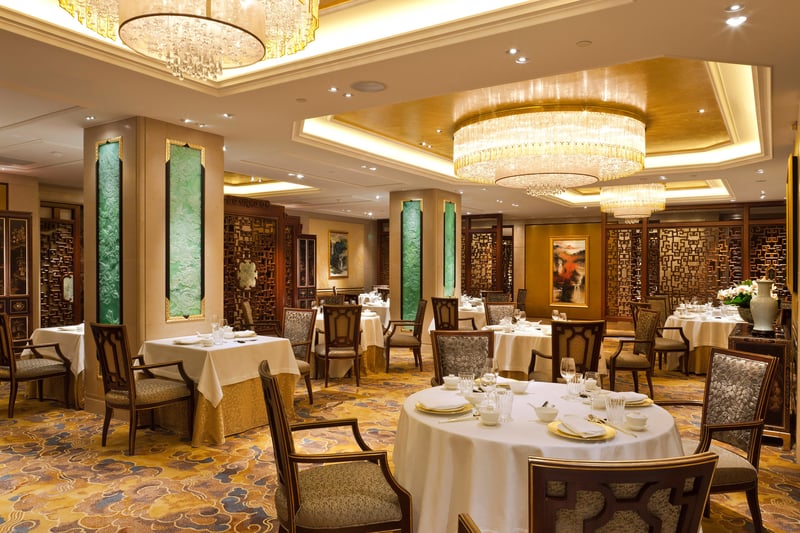
At the Four Seasons George V, Simone Zanoni's Italian-inspired cuisine earns both a Michelin star and Green Star for sustainability. His light Mediterranean approach showcases precise cooking and vibrant flavors, served in measured portions beneath a magnificent Baccarat chandelier. Pierre-Yves Rochon's immaculate white interiors extend to a high-ceilinged conservatory, enabling courtyard dining year-round in an atmosphere that balances refinement with ease.
Le Bristol's brasserie reimagines French classics with discreet originality, its Michelin-starred kitchen visible from tables on the lower level. The space captivates through contrast: imposing gilded columns rise between walls adorned with luminous dahlia motifs in warm orange tones, while a grand staircase connects the dining levels. Dishes arrive with meticulous presentation, flavors balanced with quiet precision. The atmosphere manages to feel both animated and intimate—a rare equilibrium for gastronomy of this caliber.
Chef Atsushi Tanaka, a Pierre Gagnaire alumnus, commands this discreetly elegant dining room near the Seine with modern cuisine that prizes precision and seasonality. The minimalist interior reflects an anti-excess ethos, while a single menu—perpetually evolving—ensures perpetual discovery. Tanaka's technique and imagination converge in dishes that demand attention from aperitif to dessert, complemented by a vaulted cellar wine bar offering a more casual extension of the experience.
Chef Romain Mahi's Michelin-starred restaurant balances classic technique with bold experimentation, layering roasted and smoky aromas into precision-driven compositions like Arctic char with celery, cauliflower, and clementine jus. Pastry chef Ayumi Sugiyama crafts ethereal finales—sugar bubbles filled with rosemary emulsion, grapefruit, and cardamom water. Franco-Japanese architects designed the mineral-toned dining room in soft clay greens and deep greys, while the chefs hand-shape evolving tableware for each menu.
Chef Yoshi Nagato, trained at Maison Rostang, Le Cinq, and Épicure, brings refined traditional cuisine to this intimate 17th arrondissement address. The menu highlights premium ingredients through precise, generous plating—Brittany lobster salad with hazelnut and roe dressing, Challans duckling lacquered in honey and Sichuan pepper, roast sweetbread with girolles. Partner Asuka Ishiba crafts desserts, while the wine list emphasizes organic and natural selections. One Michelin star.
Behind a discreet whitewashed facade on rue Pierre-Leroux, this intimate eight-seat counter restaurant earned its Michelin star through precise teppanyaki technique that bridges Japanese discipline with French luxury. The chef presents a single tasting menu highlighting Brittany lobster, chateaubriand, and sweetbreads cooked on griddles before diners, each ingredient carved and seared with exacting simplicity. The minimalist white interior and carefully chosen Burgundies complete an experience where culinary craft takes center stage.
Chef Akrame Benallal operates a discreet Japanese dining room behind a coach gateway near La Madeleine, its Soulages-inspired interior dominated by black surfaces and minimal sculpture. The Michelin-starred kitchen delivers inventive compositions centered on premium ingredients, with carte blanche menus designed to surprise through unexpected technique and flavor pairings. The aesthetic is severe and contemporary, suiting diners who favor bold culinary experimentation over predictable luxury codes.
Alan Geaam's rue Lauriston dining room earned its star through a deeply personal culinary vision: French technique infused with Lebanese heritage. The chef's refugee-to-restaurateur trajectory shapes every dish, from black falafel layered with smoked eel to Pyrenean lamb perfumed with cardamome fumée. Spice-forward yet meticulously balanced, his tasting menus span three to seven courses, delivering Mediterranean warmth within a refined gastronomic framework ideal for adventurous fine-dining devotees.
Frequently Asked Questions
Which Paris neighborhoods have the highest concentration of one-star restaurants?
+
The 7th and 8th arrondissements hold significant clusters, particularly around Rue Saint-Dominique and the streets near the Champs-Élysées. The 11th arrondissement has emerged as a destination for chef-driven counters and modern tasting formats.
How far in advance should I book a one-star restaurant in Paris?
+
Most restaurants open reservations four to six weeks ahead. Weekday lunches are generally easier to secure than Friday or Saturday dinners, and cancellations sometimes free up tables closer to the date.
What is the typical price range for a tasting menu at a Paris one-star?
+
Lunch menus often start around €50–80, while evening tasting formats range from €90 to €180 depending on the number of courses. Wine pairings add considerably to the total.
Nearby Destinations
Explore FranceThe single-star category represents the broadest tier of Michelin recognition, and the density across the city reflects the depth of culinary ambition here. The 7th arrondissement around Rue Saint-Dominique clusters several addresses within walking distance, while the 8th near the Champs-Élysées draws a more international clientele. Le Marais and the 11th have seen younger chefs open counter-style rooms with open kitchens, often serving tasting menus under ten courses.
Reservations typically open four to six weeks ahead, though midweek lunches remain more accessible. Many kitchens at this level showcase regional French traditions — Breton seafood, Basque influences, Burgundian classicism — alongside contemporary techniques. For those planning an extended stay, pairing a starred dinner with one of the city's best hotels or exploring the broader restaurant scene makes for a well-rounded itinerary.