


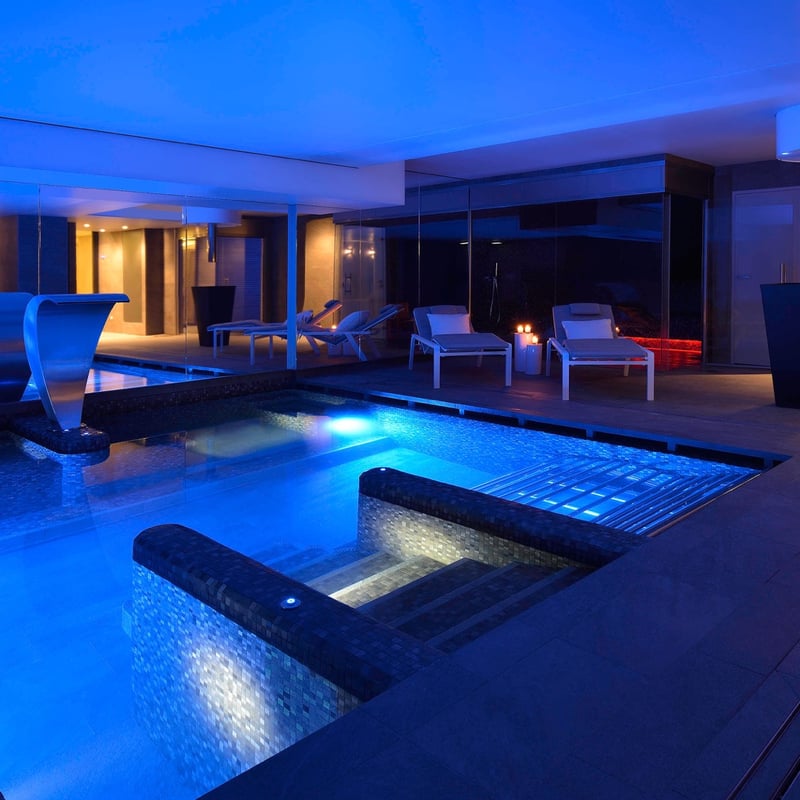
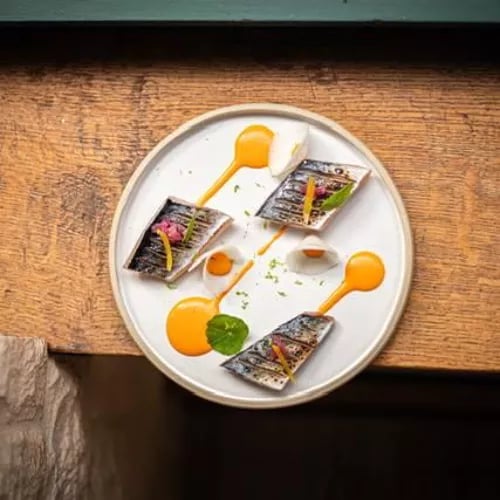
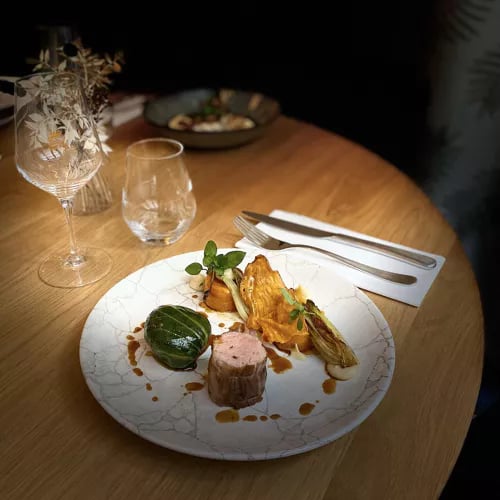
Rennes' sole five-star address occupies two restored townhouses near the Parliament, distinguished by its 300 m² Nuxe spa with starlit hammam, ice waterfall, and hour-long sensory circuit included nightly. La Table de Balthazar showcases rising chef Benjamin Jourdren's inventive repertoire—crispy egg with lavender emulsion—under the guidance of Michelin-starred Michel Rostang. The owner's eclectic design punctuates 1970s metallic wallpaper and purchasable contemporary art with an interior patio thick with greenery, while two top-floor suites open onto sprawling terraces overlooking the city's rooftops.
Rennes Travel Guide: Best Hotels, Restaurants & Experiences 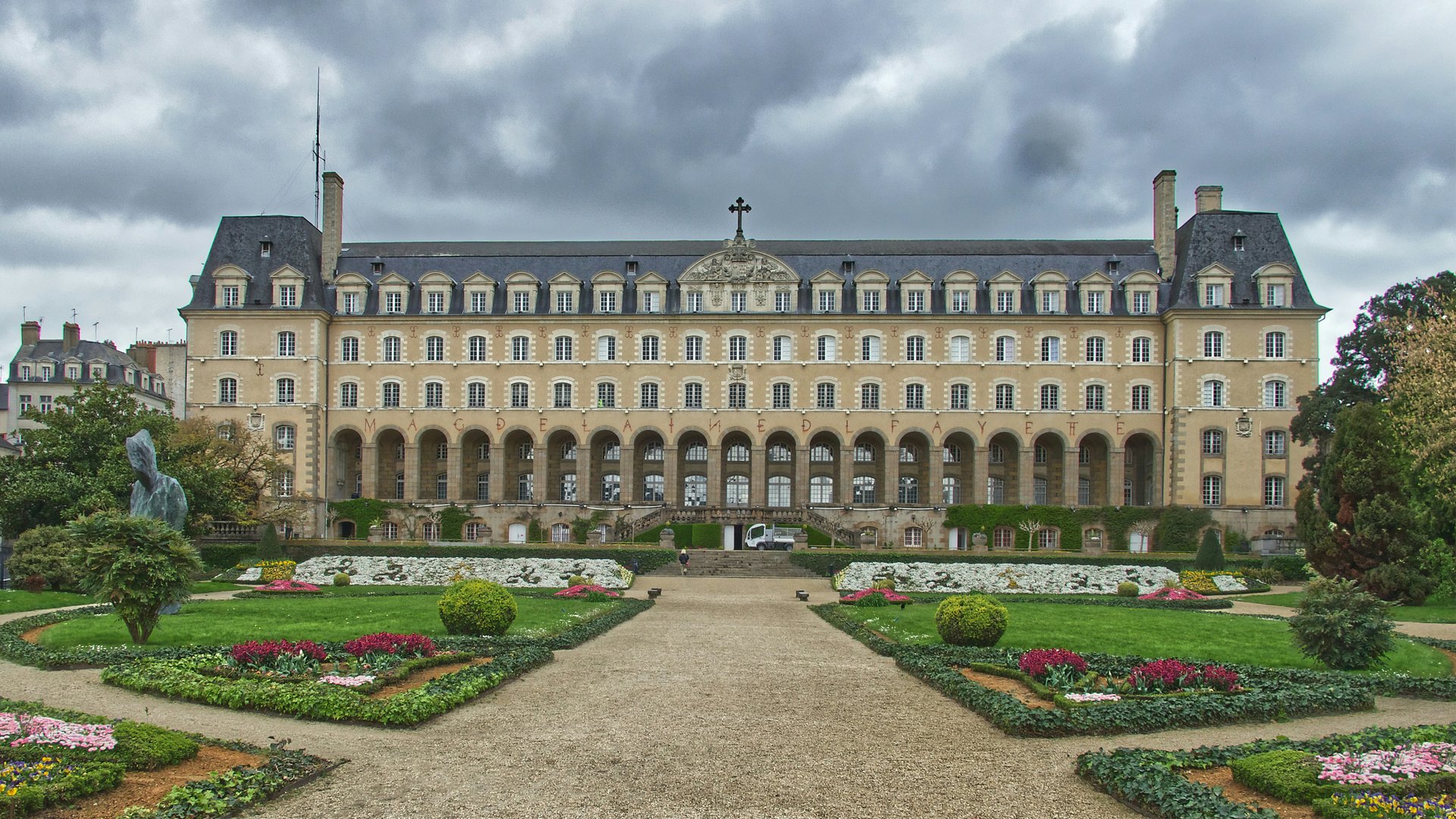
Explore Rennes
Hotels (3)
Restaurants (10)
Where to Stay

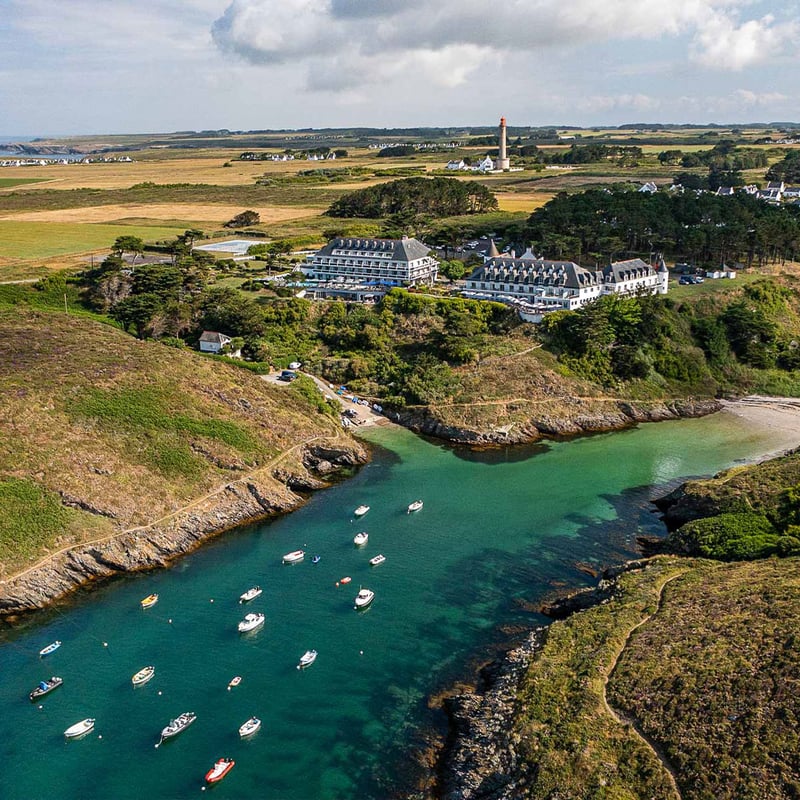
Perched on the cliffs of Belle-Île-en-Mer's Côte Sauvage—where Monet once set his easel above Goulphar Bay—this thalassotherapy retreat occupies two slate-roofed 1960s buildings with 39 ocean-facing rooms dressed in relaxed seaside tones. The 1,000-square-meter spa draws on Breton marine expertise from Thalion, while Le 180° restaurant brings spice-inflected local seafood to a panoramic terrace. Bikes await for exploring 95 kilometers of coastal paths.

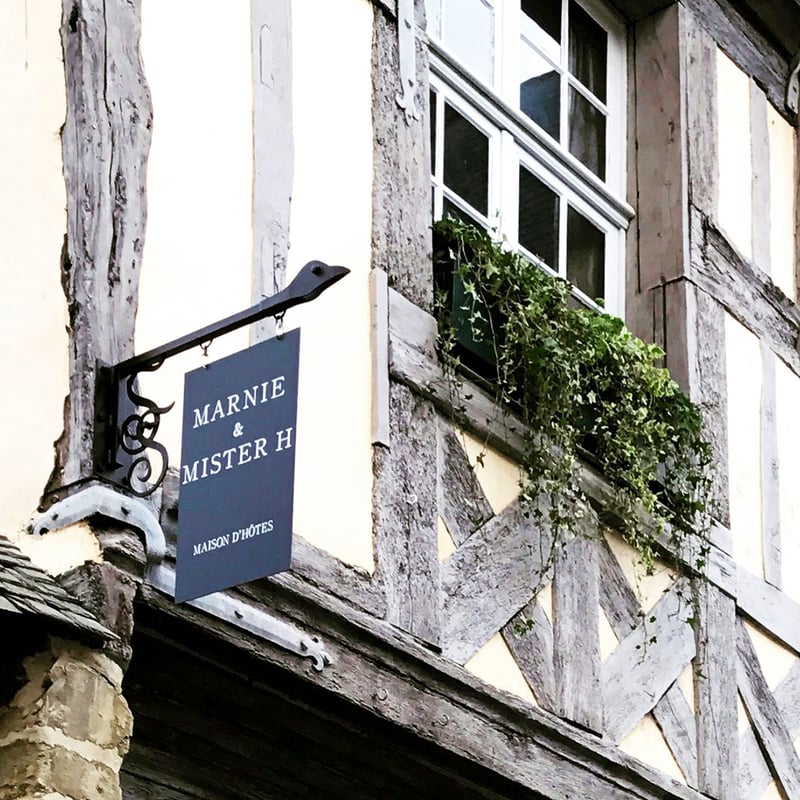
Hitchcock devotees will appreciate this five-room homage to the director's thriller Marnie, occupying a 16th-century townhouse near Rennes' historic core. Oak floors and boldly patterned wallpaper anchor each individually styled bedroom; mid-century silhouettes and compact tiled bathrooms extend the cinematic sixties aesthetic. A stone-fireplace lounge, candlelit after dark, doubles as breakfast venue. Pet-friendly policies welcome dogs for a supplement, while self-service parking suits road-trippers exploring Brittany's capital.
Where to Eat

★★ Michelin
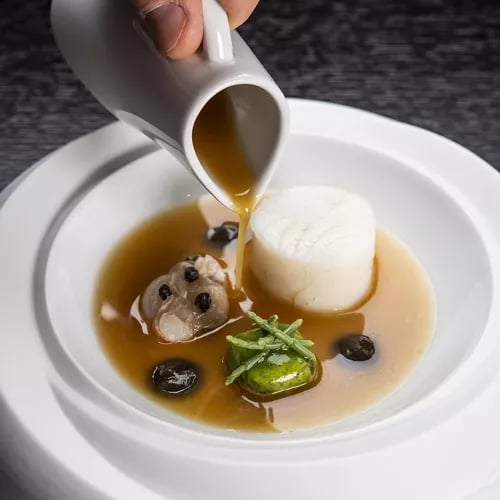
Ronan Kervarrec channels his Breton heritage through buckwheat, buttermilk, shellfish, and seaweed, each dish a personal narrative shaped by the region's larder. His mastery of jus and sauces—learned from his father, once a saucier at the George V—brings depth to every plate. Floor-to-ceiling windows frame a garden terrace, while guestrooms allow extended stays and a delicatessen offers edible souvenirs.

★ Michelin· Green Star ●
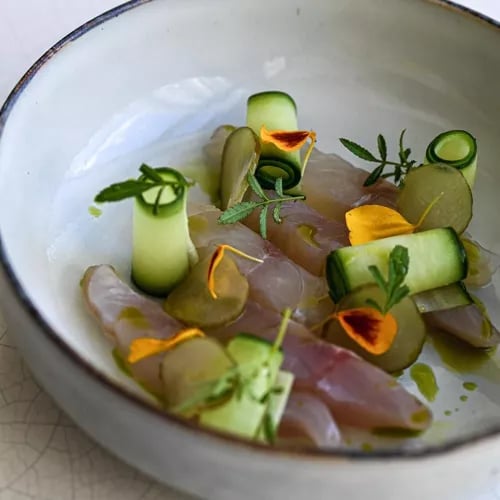
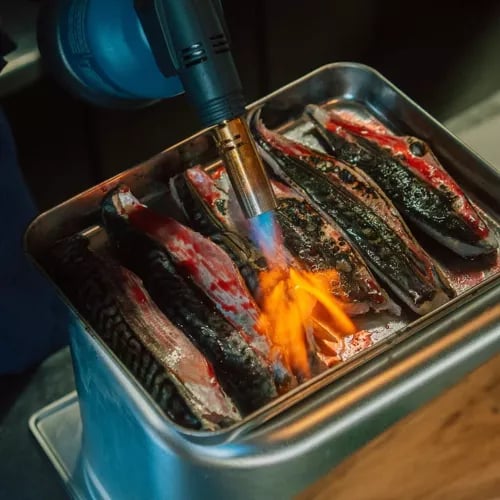
Chef Julien Lemarié draws on stints in London, Tokyo, and Singapore to craft instinctive Japanese cuisine at this one-Michelin-starred address. Tasting menus layer regional Breton ingredients with Asian technique, dishes lifted by broths, infusions, and seaweed. The Green Star underscores a commitment to sustainable sourcing, while counter seats deliver the intimacy of a kappo bar—precision knife work and plating theatre included.

★ Michelin
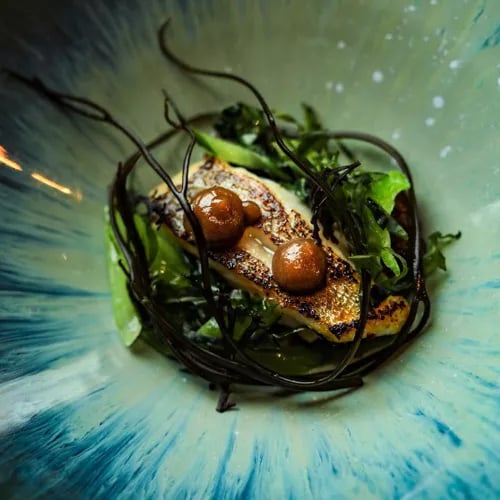
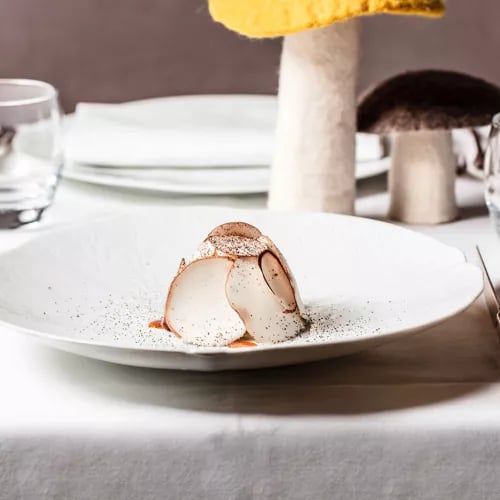
A handsome granite building on the banks of the Vilaine, just outside Rennes, houses this one-Michelin-starred table. Sylvain Guillemot, shaped by years under Alain Passard, practices an instinctive cooking style that leans on trusted local suppliers for seaweed, heritage poultry, and farmhouse butter. The light-filled dining room extends onto a riverside terrace—an ideal setting for unhurried gastronomic meals.

★ Michelin
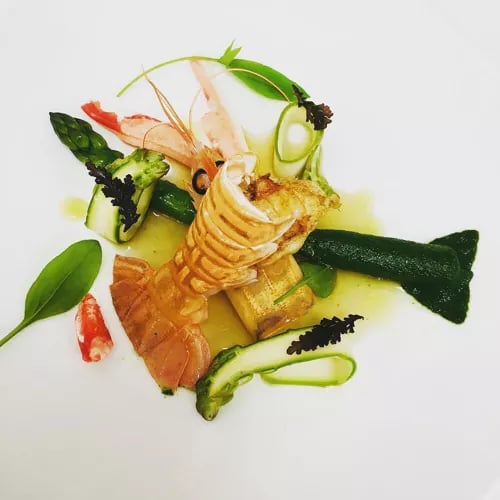
A circular dining room topped with a living roof sits like a landed spacecraft amid the vegetable gardens of an 18th-century estate near Rennes. Chef Jérôme Jouadé, awarded one Michelin star, forages wild plants and harvests from his own greenhouse, snail pen, and orchard to compose dishes such as skate wing with La Torche white asparagus and vanilla beurre blanc. The wine list favors organic and biodynamic producers.

★ Michelin
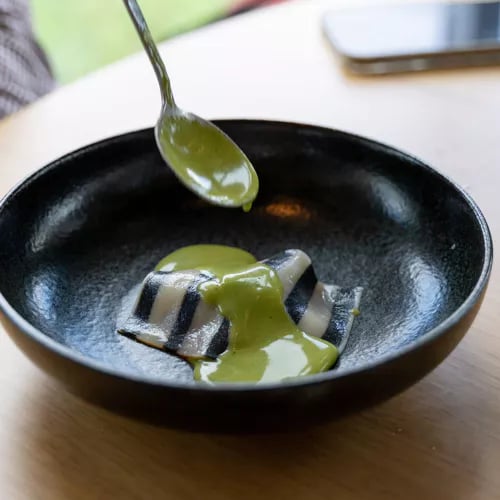
Virginie Giboire brings formidable technique—honed under Guy Martin and Thierry Marx—to this one-starred table in Rennes, where short menus spotlight Breton small-producer ingredients in dishes defined by textural interplay and precise flavor marriages. The dining room is bright and contemporary, a fitting frame for cooking that balances elegance with bold regional character. Each plate reads as both homage and evolution, rooted firmly in Brittany yet thoroughly modern in execution.

Michelin Selected
Benjamin Jourdren's Michelin Plate dining room champions local Breton sourcing with unfussy precision—rabbits from Clos Vieuville, pigeons from Joël Poirier, microgreens grown fifteen kilometers away in Montfort. His 'simple but not simplistic' philosophy yields dishes like scallops seared in fermented milk, kale ravioles with citron, and hay-scented quenelle with apple, each plate legible yet inventive. Sunday's Grand déjeuner replaces brunch buffets with shareable cuts and whole fish, gastronomic but convivial.

Bib Gourmand
Bombance delivers on its name's promise of convivial abundance within stone-walled quarters featuring an open kitchen and counter seating. From 5pm, sharing plates pair with biodynamic and natural wines; at 7pm, the menu-carte unveils farm-to-table compositions like roast pak choi with paprika sabayon and roasted hazelnut, or skate wing bathed in citrus butter alongside smoked Jerusalem artichoke and langoustine jus—each dish demonstrating precise seasoning and ingredient-forward technique.

Bib Gourmand
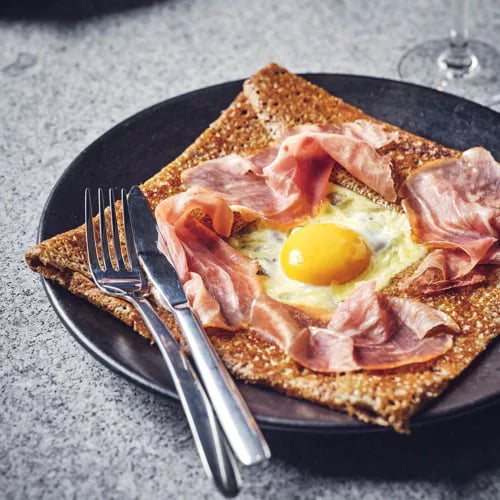
Bertrand Larcher built his reputation introducing Breton crêpes to Japan before opening this industrial-chic crêperie near Marché des Lices. The open kitchen turns out galettes using stone-ground Breton wheat and buckwheat from Vitré, layered with Pierre Oteiza's artisanal Basque charcuterie. Alongside classic versions, Japanese influences appear in creations like kinako crêpe with Okinawa black sugar and matcha ice cream. A short menu of oysters and small plates complements the crêpe selection.

Bib Gourmand
A sixteenth-century stone house on a cobbled Vitré street shelters this Bib Gourmand address, where massive wooden branches suspend the lighting above an ancient fireplace. The chef commands an open kitchen with quiet intensity, sending out vibrant bistronomic plates—pressed skate with lemony fish fumet, or a blackcurrant-fig tartlet rendered four ways. The lunch menu delivers exceptional value.

Bib Gourmand
Siblings Maxime and Estelle Besnier helm this Bib Gourmand address on a pedestrian street in central Rennes, where Breton ingredients meet bistronomy in a dining room anchored by exposed beams, original hardwood floors, and a stone fireplace. Maxime's kitchen delivers precision and generosity in equal measure—chicken oyster with mushroom cream, hake with chorizo and samphire—while the midday menu offers exceptional value for a joyful, indulgent lunch.
Frequently Asked Questions
Which neighborhood in Rennes is best for restaurants and nightlife?
+
The area around Rue Saint-Michel and Place Sainte-Anne concentrates the densest selection of restaurants, bars, and cafés. Known locally as Rue de la Soif, this student-friendly quarter stays lively until late. For quieter dining, the streets near Place des Lices and the Parlement de Bretagne offer more refined options in historic settings.
What local specialties should visitors try in Rennes?
+
Galettes de sarrasin (buckwheat crêpes) filled with local andouille sausage, egg, and Gruyère represent the essential Breton meal. Pair them with proper cider served in ceramic bowls. Kouign-amann, the caramelized butter cake from nearby Douarnenez, and far breton studded with prunes make for traditional desserts. The Saturday market at Place des Lices showcases regional cheeses, Bordier butter, and oysters from Cancale.
Is Rennes walkable for visitors staying in the city center?
+
The historic centre is compact and entirely walkable. From the train station, Place de la République sits ten minutes on foot; the medieval quarter around Place des Lices another five beyond. The Thabor gardens lie a short walk east of the centre. A metro line connects outlying areas, but most hotels, restaurants, and attractions cluster within a fifteen-minute radius of the Parlement de Bretagne.
Nearby Destinations
Explore France




Rennes
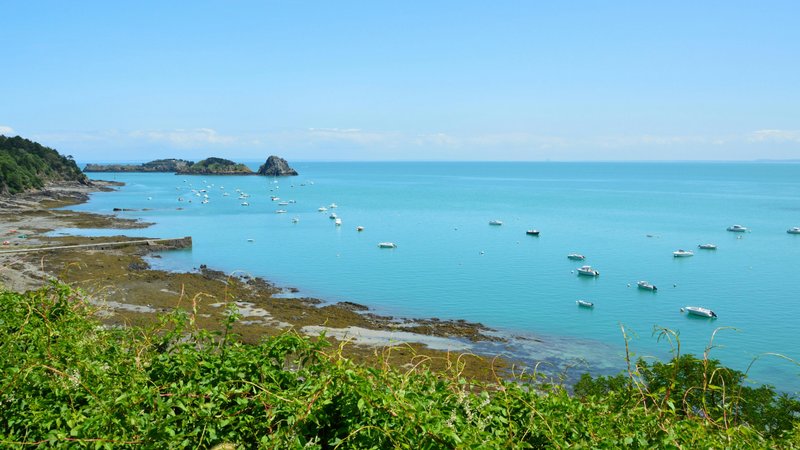
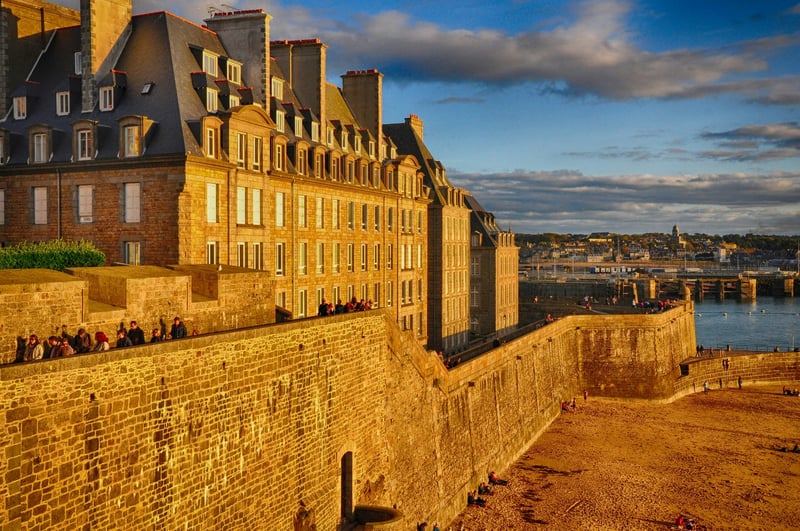
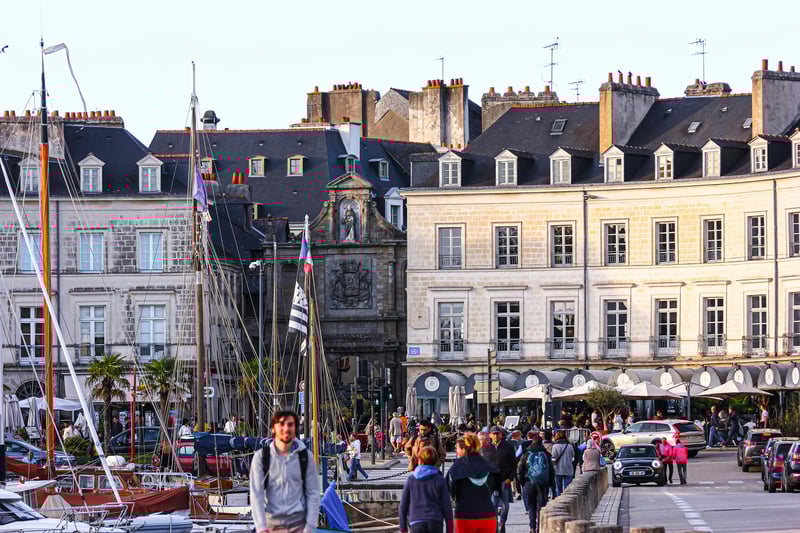
Rennes rewards those who arrive without expectations. The capital of Brittany operates at its own rhythm — half-timbered houses lean into cobblestone streets around Place des Lices, where Saturday's market has drawn crowds since 1622. The city rebuilt itself after the great fire of 1720, trading medieval density for Parisian-style granite façades along Rue Le Bastard and Place de la Mairie. Yet pockets of the old town survived: the Portes Mordelaises still mark the ceremonial entrance where Breton dukes once processed. Students from two major universities keep the scene young, filling terraces along Rue Saint-Michel — locals call it Rue de la Soif — while the Thabor gardens offer seventeen hectares of French formality and English romanticism.
The dining scene here punches well above its weight. Breton ingredients — Cancale oysters, Saint-Malo langoustines, salted butter from Bordier — find expression in kitchens ranging from traditional crêperies to the city's best bistronomic restaurants. For a complete overview, the best restaurants guide covers everything from market-driven bistros to refined tasting menus. Hotels cluster around the centre-ville and near the train station, with restored townhouses offering more character than the business chains. The Parlement de Bretagne — a masterpiece of French Baroque restored after a 1994 fire — anchors the civic quarter, a reminder that Rennes governed an independent duchy before France absorbed it in 1532.