Centuries-old stone manors, a fisherman's cottage, and a granite castle scatter across a rocky Breton peninsula where every room faces the open Atlantic. The gastronomic restaurant showcases local lobster—reputedly the finest anywhere—while Brittany's oldest marine spa center draws on seaweed wraps and salt scrubs. Flowered gardens lead to private shoreline walks along the Sentier des Douaniers, suited to travelers seeking coastal solitude with substance.
Explore Vannes
Where to Stay
Where to Eat
A Pierre Gagnaire protégé commands the kitchen of this one-Michelin-starred country house near Vannes, channeling Brittany's coastal and agricultural wealth into refined compositions. Local mushrooms arrive roasted, folded into ravioles, and suspended in consommé; John Dory shares the plate with artichokes, cured meat, and shellfish in white wine. The dining room's driftwood accents and muted ecru tones echo the region's rugged shores, while a flower-laden terrace beckons in summer.
Chef Olivier Samson crafts tasting menus that celebrate Celtic terroir within a restored sixteenth-century Breton manor, surrounded by flower gardens and ancient trees. His creative technique highlights local precision—Breton abalone with spinach and pork jus, small-boat sole with asparagus and kumquat, roast pigeon enriched with cocoa—while buckwheat, sea fennel, and buttermilk ground each refined course in regional identity.
Clément Raby and Estelle Mercier have earned a Michelin star for their unconventional approach to modern gastronomy. The couple's "cuisine libre" philosophy manifests in blind tasting menus—dishes revealed only after the first bite, challenging diners to trust their palates without preconception. The relaxed atmosphere contrasts with the precision of each plate, where inventive combinations and technical confidence define every course. A meal here rewards adventurous eaters seeking spontaneity alongside rigor.
Chef Vincent David's childhood visits to this address near Vannes ignited a lifelong passion for gastronomy, later refined under masters Dominique Bouchet and Marc Meneau. Now holding one Michelin star, his kitchen explores unexpected meat and fish pairings accented with Asian influences. The signature crispy langoustine, reimagined each season, captures his precise yet inventive approach to traditional French cuisine.
Baptiste Denieul, shaped by years alongside Éric Frechon at the Bristol, returned to his Breton roots near the mythic forest of Brocéliande—where his grandparents pioneered Brittany's first fresh crêpe factory. His one-starred table showcases garden vegetables and local fish with quiet precision, earning a Green Star for its sustainable philosophy. Marion Denieul orchestrates the dining room with warmth befitting the name: Tiegezh means family.
Chef Maxime Nouail brings an unusual credential to his kitchen: he's also a fisherman, sourcing the lobster that has become the house signature — prepared with such mastery that devotees claim it rivals any in the world. The setting amplifies the experience: a family-owned Breton estate of traditional cottages perched above the Atlantic, where ocean views stretch uninterrupted from the dining room. Regional cooking at its most elemental and refined.
Chef Sophie Reignier and pastry chef Julien Noray, who both came to catering later in their careers after meeting at Alan Geaam in Paris, craft a seafood-focused vision of Brittany through precisely sourced ingredients and creative technique. Gravlax of mullet, eel lacquered in pomegranate molasses, and langoustine sautéed in foamy butter with sea fennel showcase their talent for marrying land and sea in dishes that balance pared-back presentation with bold, forthright flavours.
Virginia creeper cloaks the old stone farmstead where Emmanuel Kouri, alumnus of Paris's Les Climats, orchestrates a seafood-driven menu rooted in meticulous sourcing—line-caught fish, organic vegetables, local dairy. Signature plates reveal his precision: flame-licked young mackerel with nasturtium leaves, pearlescent monkfish in shellfish marinière with salsa verde. The shaded terrace amid wooded grounds suits leisurely summer lunches.
The 17th-century mansion of the Lord of Roscanvec now houses a contemporary dining room where the two Kaczorowski sisters orchestrate impeccable service. Farm-to-table dishes reflect modern palates while honoring regional ingredients, earning a Michelin plate for their execution. The pared-back aesthetic lets the cuisine command attention, and guests seeking to linger can retreat to one of the comfortable guestrooms upstairs.
A weathered Breton stone house in the characterful town of La Roche-Bernard shelters this Bib Gourmand address, where the chef's creative instincts find expression in dishes like line-caught pollack paired with squid-ink buckwheat risotto. Bread emerges fresh from his own oven daily. The market-driven lunch menu delivers refined seasonal cooking at uncommonly accessible prices—a serious table without the ceremony.
What to Do
Brittany's oldest marine spa draws on centuries of balneotherapy tradition at the Pointe de Pen-Lan. The Aqua Phénicia ritual spaces—Phoenician baths, Moorish salon, Aztec patio—create an atmospheric sequence unlike typical coastal retreats. Therapists work with local seaweed and sea salts, while signature hot stone treatments incorporate aromatic herbs, a nod to the sailors who once anchored in these waters. Sauna, hammam, and heated pool complete the offering.
Frequently Asked Questions
What neighbourhoods should I stay in when visiting Vannes?
+
The intra-muros (walled town) places you within walking distance of the cathedral, main squares, and best dining. The port area suits those who prefer waterfront views and proximity to boats departing for the Gulf of Morbihan islands. Both areas are compact and easily connected on foot.
When is the best time to visit Vannes?
+
Late spring through early autumn offers the mildest weather and fullest restaurant terraces. The Fêtes Historiques in mid-July transforms the old town with medieval pageantry. Winter brings quieter streets, fresh oysters at peak season, and atmospheric fog rolling in from the gulf.
How do I explore the Gulf of Morbihan from Vannes?
+
Boats depart regularly from the port for the Île-aux-Moines and Île d'Arz, both reachable in under thirty minutes. Longer excursions circle the gulf's scattered islands or stop at the megalithic sites of Gavrinis. The gulf's calm waters also suit kayaking and small-boat sailing.
Nearby Destinations
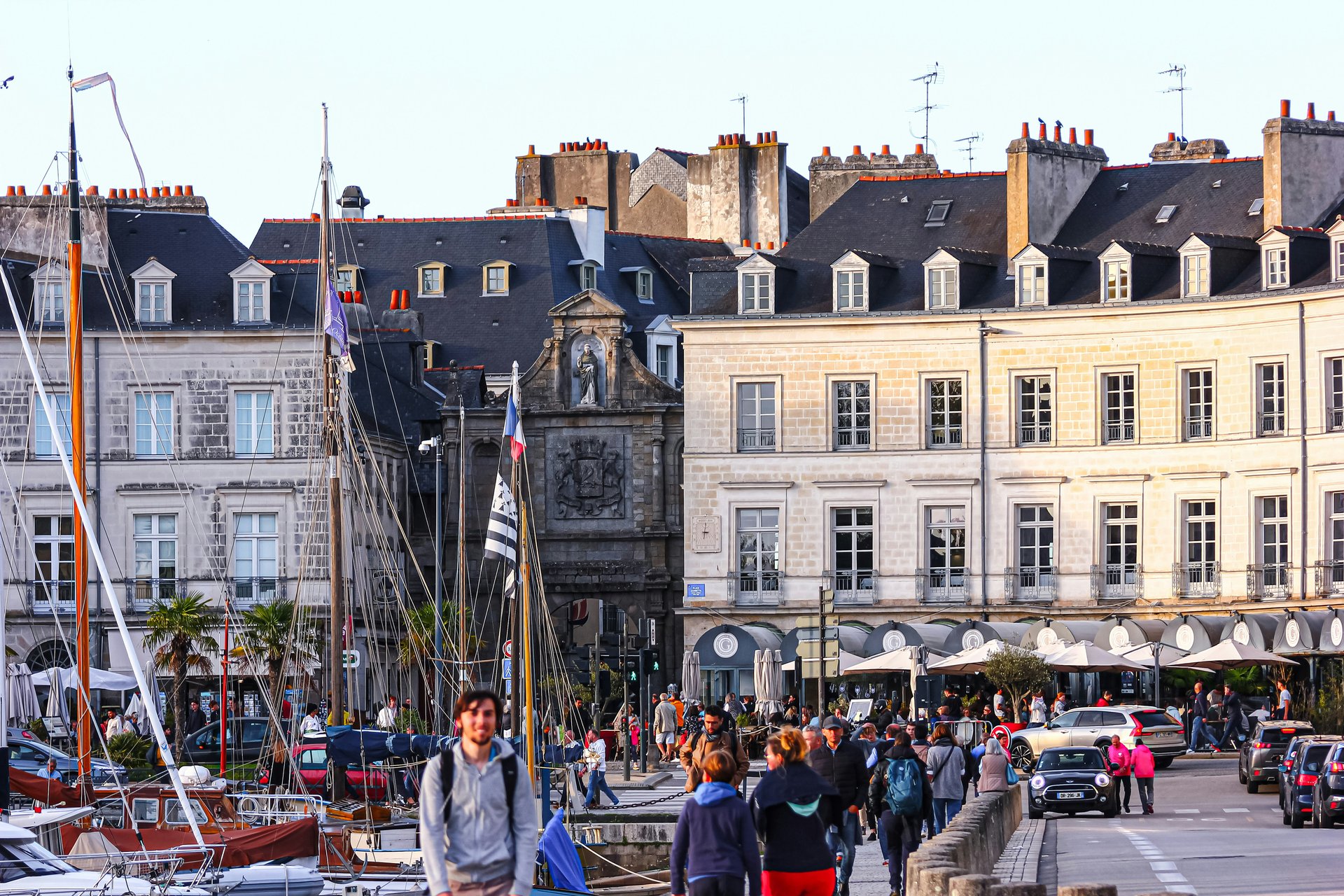
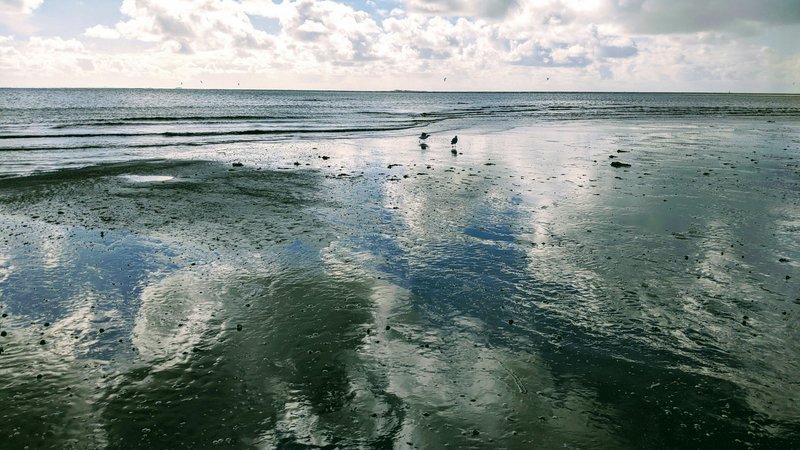
Explore FranceVannes wraps around its medieval core like a stone embrace. The ramparts still stand, half-timbered houses lean into cobbled lanes, and the cathedral of Saint-Pierre anchors the old town with its Romanesque tower. Beyond the walled centre, the port opens onto the Gulf of Morbihan — a sheltered inland sea scattered with islands, where oyster beds mark the shallows and sailing boats drift between the tides.
The city's hotels cluster in two distinct zones: the historic intra-muros, where converted manor houses and centuries-old buildings offer rooms behind carved granite facades, and the waterfront near the port, where contemporary addresses look out over the marina. The dining scene draws on Brittany's coastal larder — langoustines from Quiberon, Morbihan oysters, buckwheat in all its forms — and the best restaurants balance tradition with modern technique. For meals steeped in local heritage, the historic restaurants occupy some of the town's most atmospheric settings: vaulted cellars, timbered dining rooms, and terraces beneath the ramparts.