Palazzo Papadopoli's 16th-century Renaissance interiors house Aman's 24-room Venetian outpost, where Giambattista Tiepolo ceiling frescoes and Murano glass chandeliers meet Jean-Michel Gathy's contemporary design. The Grand Canal's only hotel garden spans 2,800 square feet of manicured lawn for dining from April through October. Restaurant Arva serves lagoon-sourced eel, handmade chestnut-flour pasta, and venison foraged from regional farms. George and Amal Clooney held their 2014 wedding reception here.
Explore Venice
Where to Stay
Set on Giudecca Island with sweeping lagoon views toward St. Mark's Square, Hotel Cipriani delivers understated elegance through manicured gardens, Venice's only heated saltwater pool, and the 15th-century Palazzo Vendramin annex offering 16 rooms with private butler service. Cip's Club extends over the water on a covered deck, while Giuseppe Cipriani's original Bellini recipe remains the signature pour at the bar.
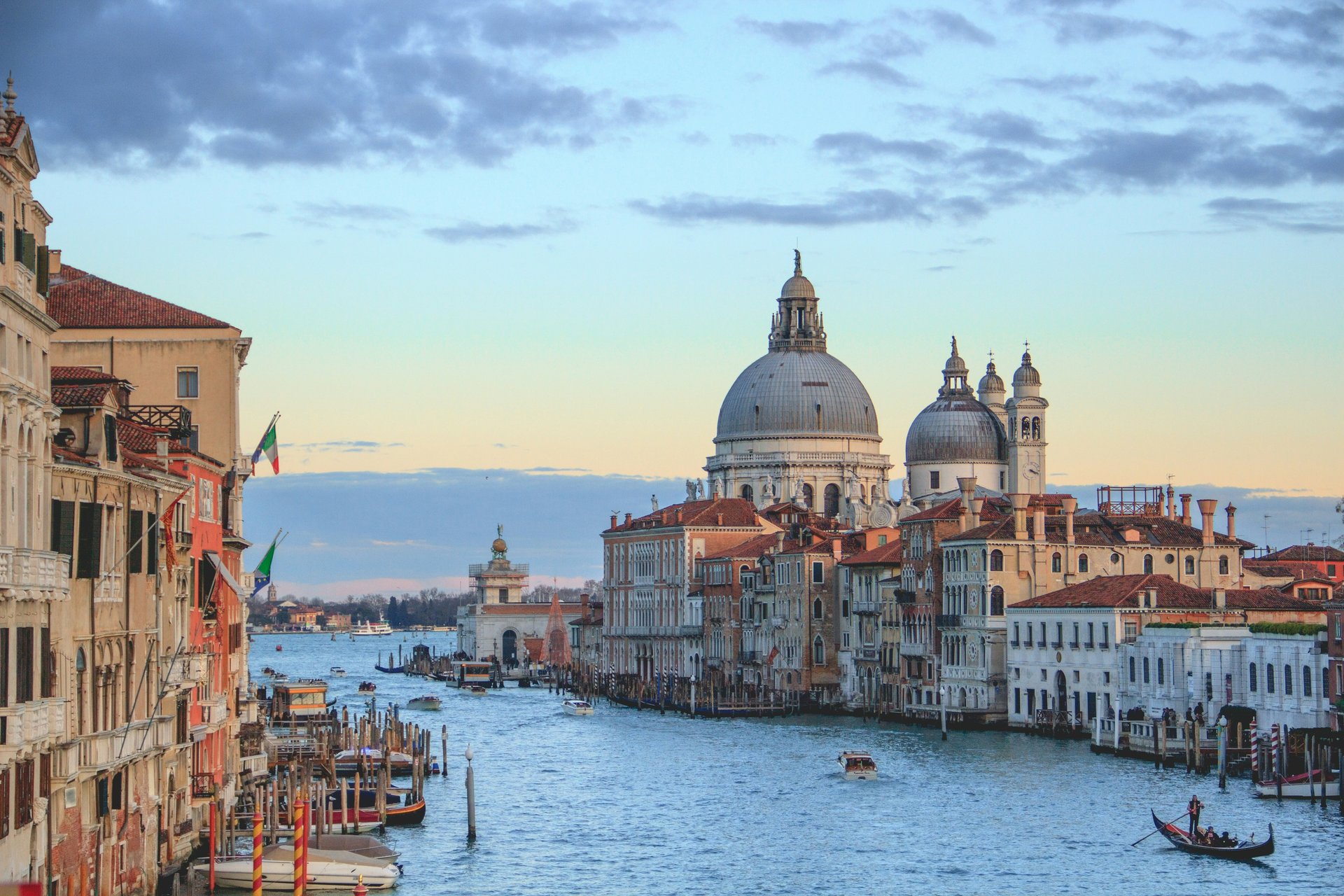
The 15th-century palazzo of Doge Andrea Gritti commands a prime stretch of the Grand Canal, its Gothic facades facing the Basilica di Santa Maria della Salute. Interiors gleam with 18th-century antiques, Murano glass chandeliers, and hand-carved wooden lamps, while the seasonal Gritti Terrace sets tables mere inches from the water. The Gritti SPA, partnering with Sisley Paris, delivers Phyto-Aromatiques treatments blending global massage traditions with aromatherapy.
Venice's former stock exchange now hosts this 43-room property from the Evok Collection, the Parisian group behind Brach and Cour des Vosges. Art Deco lines, saturated hues, and Venetian glass infuse interiors that merge French savoir-faire with local craft. Breakfast unfolds in the original trading hall, while a gold-mosaic spa bath perches in the eaves. The courtyard bistro and rooftop pool suit travellers seeking refined design steps from Ferragamo and Armani.
Tchaikovsky composed his Fourth Symphony in room 108 of this storied 1853 palazzo, drawn by lagoon vistas through 100 windows facing San Giorgio Maggiore and the Basilica della Salute. Just 52 Biedermeier-styled rooms feature antiques and pink Carrara marble baths, while Venice's highest rooftop terrace sweeps from the Dolomites to the islands. Chef Loris Indri sources Rialto market fish for Do Leoni's waterfront dining on Riva degli Schiavoni.
Parts of this Arsenale palazzo date to 1272, though its contemporary Italian design—Murano glass lamps, local fabrics, marble baths—feels decidedly modern. Lagoon-facing rooms and an Altana Suite with 360-degree terrace views frame San Giorgio and passing gondolas. VERO Restaurant serves Venetian seafood traditions outdoors overlooking the water, while three tranquil courtyards offer a rare respite from the city's perpetual crowds. The location places guests within walking distance of the Biennale grounds.
On the Riva degli Schiavoni, Hotel Metropole Venice channels its layered past as convent, orphanage, music school and wartime hospital into an art-filled, Silk Road-inflected interior. Many of its 67 rooms look to canal or lagoon, with a private water entrance for taxi arrivals and prized views toward St. Mark’s Square. Met Restaurant, Orientalbar & Bistrot, the Vivaldi-linked tearoom and spa suit history-minded luxury travelers.
Exposed ceiling frescoes and terrazzo floors meet Eames chairs and industrial-chic details across eleven rooms that reject Venetian brocade-and-chandelier conventions. Canal-view balconies overlook the waterways between San Marco and Rialto Bridge, while the wisteria-shaded courtyard provides escape from the tourist throng. A wine cellar anchors the property, though breakfast aside, dining requires venturing into the maze of cobbled alleys outside.
Steps from Piazza San Marco, Violino d’Oro feels composed rather than showy: 32 compact rooms and suites unfold across three Venetian palazzi, with Italian-made interiors from Murano glass to modern artworks. Il Piccolo adds a modern Venetian restaurant-bar with a vegetarian emphasis, while suites and connecting rooms make the address workable for art-minded couples and families seeking calm near Venice’s busiest quarter.
This nineteenth-century palazzo, reimagined by Florentine architect Luigi Ciompi, occupies the mouth of the Grand Canal with lagoon views on one side and Dorsoduro's museum quarter behind. Interiors strip Venetian motifs to their essentials—gold-walled bathrooms, crimson velvet banquettes, black coffered ceilings—while suites with private balconies frame the waterway. A wooden terrace catches morning sun for breakfast or afternoon drinks, and the hotel's courtyard offers respite between visits to the neighbouring Guggenheim and Salute basilica.
Where to Eat
A thirty-minute drive from Venice, this two-Michelin-starred address ranks among Italy's foremost seafood destinations. The kitchen excels at raw preparations and charcoal-grilled fish, while regional classics like cassopipa and broetto anchor the menu alongside fritto misto. Po Delta Perla Rosa oysters deserve special attention. The minimalist dining room and deep white wine list suit serious gastronomic occasions.
Donato Ascani commands the kitchen at this two-Michelin-starred dining room inside Palazzo Venart, bringing precision technique to lagoon vegetables and grilled preparations. Silk Route murals line the walls, a nod to Venice's trading past, while two tasting menus showcase Venetian ingredients with contemporary discipline. Diners can opt for à la carte selections or settle into one of the gardens—one facing quiet canals, the other the Grand Canal itself.
Accessible only by boat, this one-starred destination occupies a private island in the Venetian lagoon, where chef Lorenzo Lai—working under Emanuele Scarello's guidance—presents two distinctive tasting menus. LagunAmare highlights the day's finest catch, while Giardino delle Rose draws entirely from the property's kitchen garden, both compositions reflecting the island's biodiversity. Summer arrivals begin with aperitifs on a terrace overlooking the olive grove before moving inside for refined Venetian cuisine.
Salvatore Sodano's Michelin-starred restaurant offers an immersive seafood tasting experience in a modern, minimalist setting with an open kitchen. The seven- or nine-course menus showcase the chef's technical precision and creative approach to Venetian coastal cuisine, complemented by a wine cellar housing nearly a thousand labels, predominantly Italian. The warm, personable service and theatrical kitchen views make it a compelling choice for serious gastronomic occasions.
Within the Hotel Cipriani on tranquil Giudecca island, chef Vania Ghedini's Michelin-starred table marries her Moroccan culinary past with Venetian locale in a lagoon-facing round dining room. The signature Laguna showcases precision in both flavor balance and texture, while the tasting menu threads lagoon catches with lighter vegetarian plates. Finish with the cherry tart sharpened by balsamic vinegar—essential for those who favor fruit-forward finales.
Wistèria's one-Michelin-starred kitchen delivers modern Venetian cuisine through six- or eight-course tasting menus that follow the rhythms of seasonal ingredients and regional specialties. Tables spill onto a canal-side terrace beneath fragrant wisteria when weather allows, creating an atmospheric counterpoint to the precision of dishes such as the acclaimed pumpkin, licorice, and almond dessert that exemplifies the restaurant's inventive approach to Veneto's culinary heritage.
On Piazza San Marco, Quadri brings a contemporary hand to Venice’s culinary repertoire under chef Sergio Preziosa. The one-Michelin-star kitchen draws its argument from the lagoon: fish from shallow waters, SantʼErasmo vegetables, shellfish and seasonal game. With a varied cellar known for less expected labels, it suits a gastronomic dinner that feels rooted in Venice rather than merely staged there.
San Martino brings one Michelin star to Rio San Martino in Scorzè, with chef Raffaele favoring concentrated flavors and garden-picked vegetables over showmanship. The cooking is exacting but grounded: tortello with sea snails carries brisk maritime intensity, scallops appear in season with mushrooms and peach compote, and pigeon is prepared two ways. It suits a serious, destination-led dinner outside the usual Venice circuit.
On Mazzorbo, Venissa turns a walled lagoon vineyard and kitchen garden into the framework for one-Michelin-star Venetian dining. Chefs Chiara Pavan and Francesco Brutto call their cooking ambientale, an environmental reading of the lagoon and Upper Adriatic expressed through fish, vegetables, and almost no meat. It suits travelers seeking a serious, quiet meal away from Venice’s busiest circuits.
Chef Alessandro Borghese operates within Palazzo Ca' Vendramin Calergi, a sixteenth-century Grand Canal residence that houses the Casinò di Venezia. His creative menu emphasizes bold, modern flavours presented on two tasting formats, each customizable with signature plates. During Venice's warmer months, service extends into the palazzo's garden, offering canal-side dining beneath historic architecture. The approach balances theatrical plating with assertive taste profiles suited to special-occasion evenings.
What to Do
Behind an unmarked door in Il Palazzo Experimental's lobby lies a jewel-toned speakeasy channeling Wes Anderson whimsy. Designer Cristina Celestino crafted the space as homage to Carlo Scarpa, its bar counter layered with three marbles echoing the Basilica of San Marco. The cocktail program spotlights Italian spirits in bespoke recipes, while a collaboration with French brand JNPR delivers inventive low-ABV alternatives for mindful drinkers.
Behind a discreet brass plaque near Campo Santa Maria del Giglio lies the birthplace of the Bellini — that perfect marriage of white peach purée and chilled Prosecco, conceived here by Giuseppe Cipriani and inspired by Renaissance painter Giovanni Bellini's rosy hues. Ernest Hemingway claimed a corner so often staff called it his office. The dry martinis arrive in small stemless glasses, bone-dry and impeccable, in a room declared a national landmark.
Giuseppe Cipriani mixed the first Bellini here in 1948, blending white peach purée with Prosecco to echo the pink tones of Renaissance painter Giovanni Bellini's canvases. The bar still follows the original formula, using fresh peaches from late spring through early fall. Across the lagoon, St. Mark's Square shimmers in the distance—the same view that once drew Hemingway to Cipriani's legendary hospitality.
Frequently Asked Questions
Which sestiere is best for a first visit to Venice?
+
San Marco provides immediate access to the Basilica, Doge's Palace, and the city's most iconic views, though Dorsoduro offers a more residential pace with excellent museums and restaurants frequented by locals rather than tour groups.
How does acqua alta affect hotel stays in Venice?
+
High water events typically occur between October and March, lasting a few hours at peak tide. Ground-floor establishments provide raised walkways, while hotels in upper floors remain unaffected. Check tide forecasts through the city's official alert system and pack waterproof boots for canal-side exploration.
What is the best way to arrive at a Venice hotel?
+
Private water taxi transfers from Marco Polo Airport deliver guests directly to hotel water entrances — an arrival experience unique to this city. The journey takes approximately forty minutes and offers immediate immersion into the lagoon landscape before reaching the historic center.
Nearby Destinations
Explore ItalyVenice operates on its own spatial logic. The city's six sestieri each carry distinct personalities: San Marco draws the crowds to its Byzantine splendor, while Dorsoduro attracts those seeking the Accademia's masterworks and the quieter fondamenta along the Giudecca Canal. Cannaregio, the old Jewish Ghetto's home ground, reveals neighborhood trattorias where Venetians actually eat. The best hotels here occupy converted palaces with private water entrances, their breakfast rooms overlooking the morning vaporetto traffic.
The dining scene rewards the curious. Beyond the tourist-trap establishments near Rialto, serious kitchens serve cicchetti at bacari wine bars and prepare risotto al nero di seppia with ink still glistening. The gastronomic restaurants source from the Rialto fish market at dawn, while traditional restaurants in Santa Croce maintain recipes unchanged for generations. This remains a city where getting lost is the point — every wrong turn reveals another private courtyard, another weathered doorway, another view that exists nowhere else on earth.